Early BGALA Activities
With the formation of BGALA and a renewed sense of energy in the organization, the group was able to sponsor a large range of activities and events in its early days.
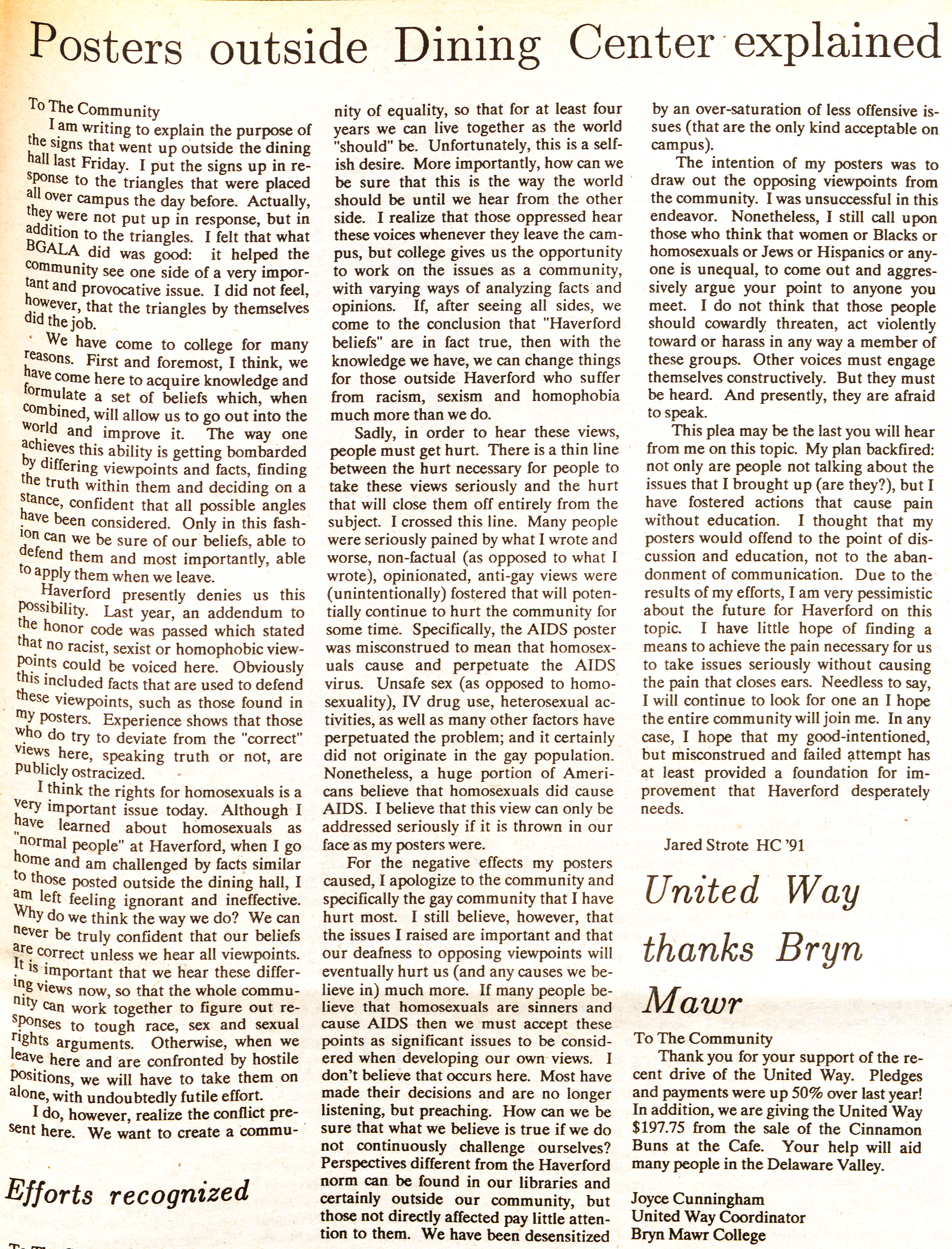
One of the foremost activities started by the club, and one which became a early tradition was an activity known as Vampire Night, or as termed in the BiCo News, the Vampire Project. In this activity, triangles and posters containing short statements about gay and lesbian students were posted on campus. Generally, the idea of Vampire Night was to create postings that argued the normality and presence of gay and lesbian students on Haverford's campus.
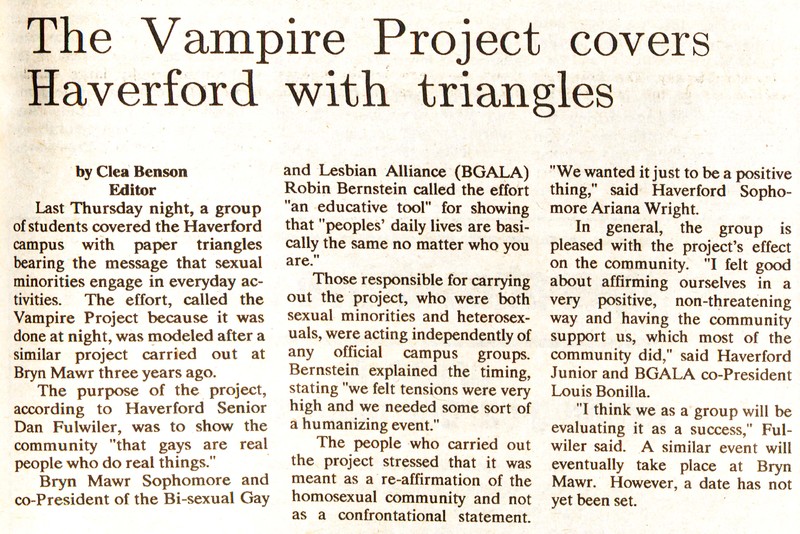
A December 1988 article describing Vampire Night postings. In response, a student posted controversial signs refuting Vampire Night on the steps of the Dining Center. Read an opinion piece by this student here.
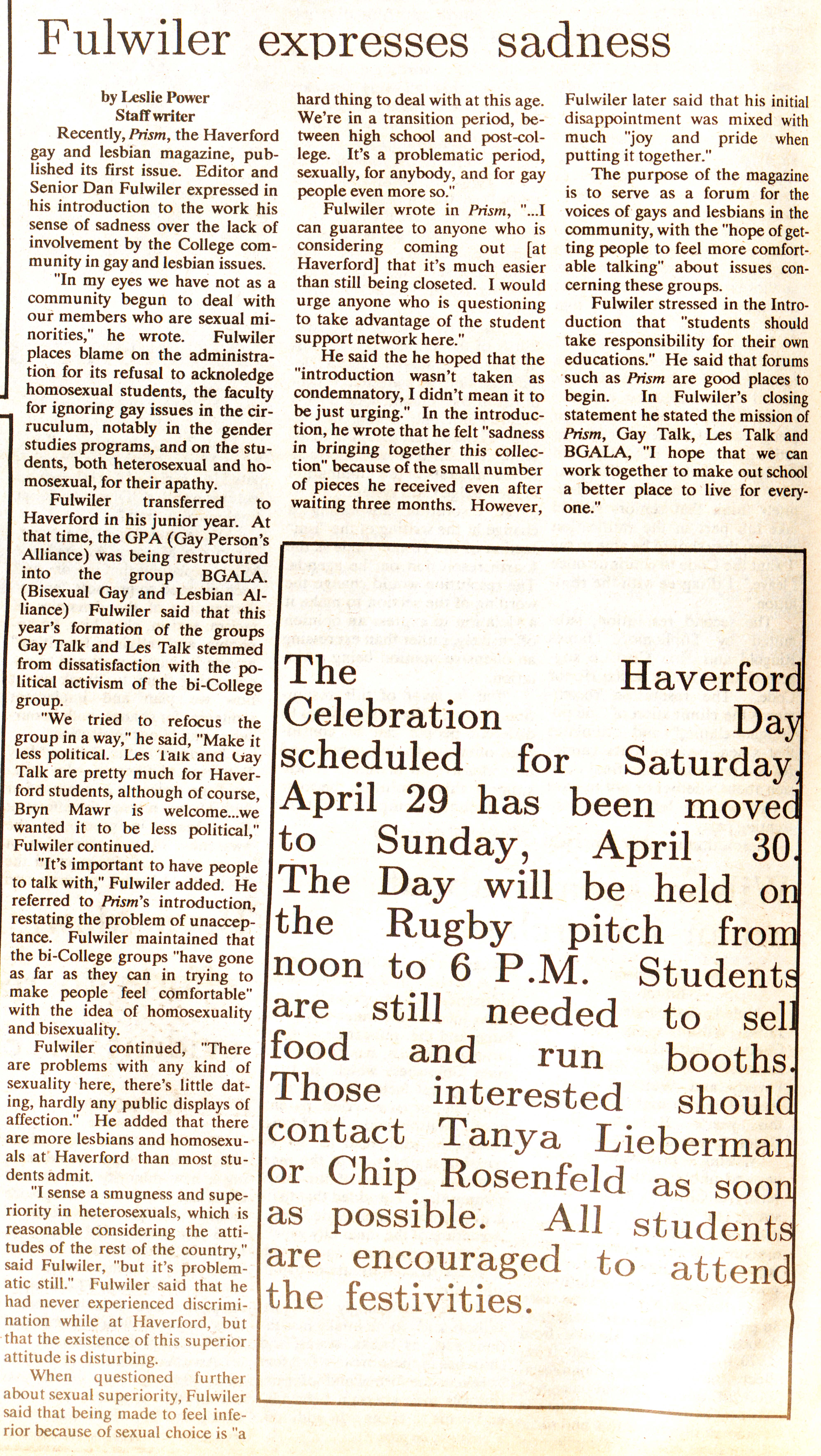
Another activity iniatiated by BGALA during this period was the publication of "Prism". Similiar to the publication of "Out and Around" by the GPA, Prism was intended to be a gay and lesbian magazine that served as a forum for expression and information of the Haverford gay and lesbian population.
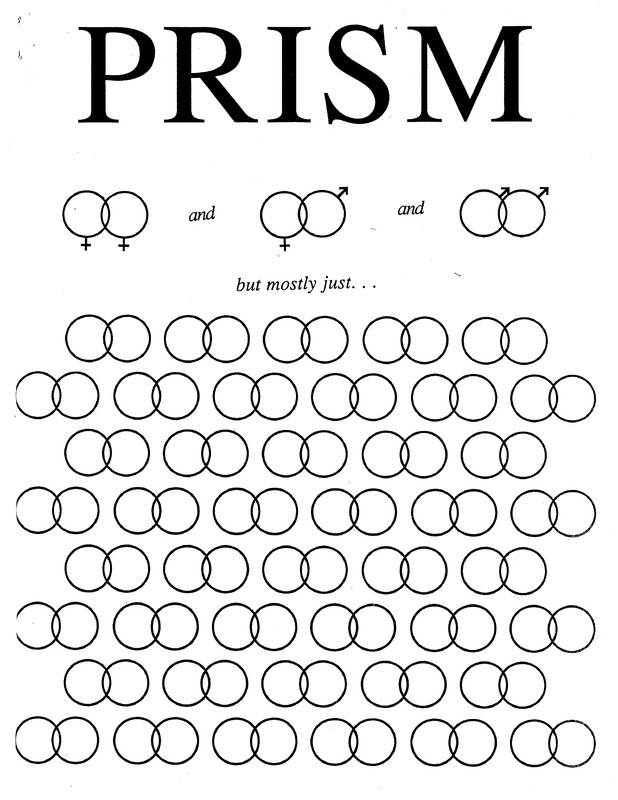
A Fall 1989 publication of Prism. Read a BiCo News article about the publication here that discusses the importance and purpose of Prism, as well as the editor's frustration at the lack of submissions.
BGALA also continued traditional programming from the past. Similiar to the GPA's Gay Weeks or Gay Awareness Week, BGALA morphed the tradition into Pride Week, a week of programming and events in the spring to promote the club and acceptance of gay and lesbian folks.
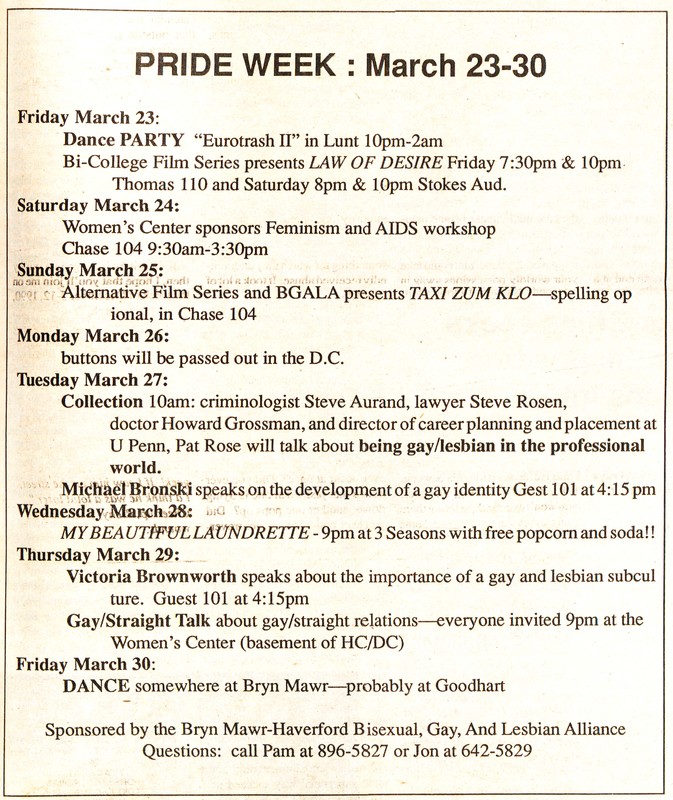
A schedule of programming for Pride Week 1990. Read a recap of Pride Week 1990 here, and read an account of the Tuesday Collection here.
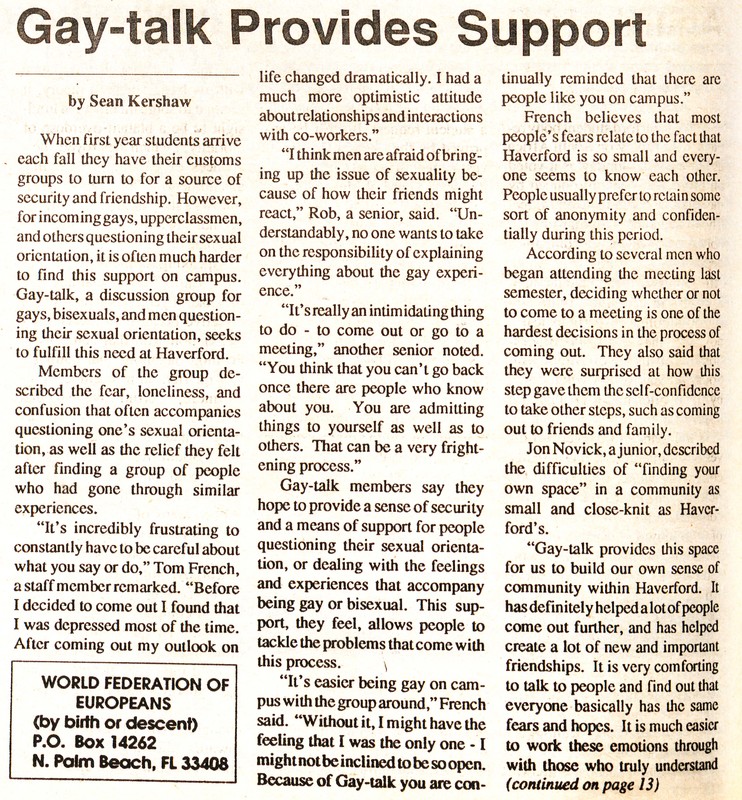
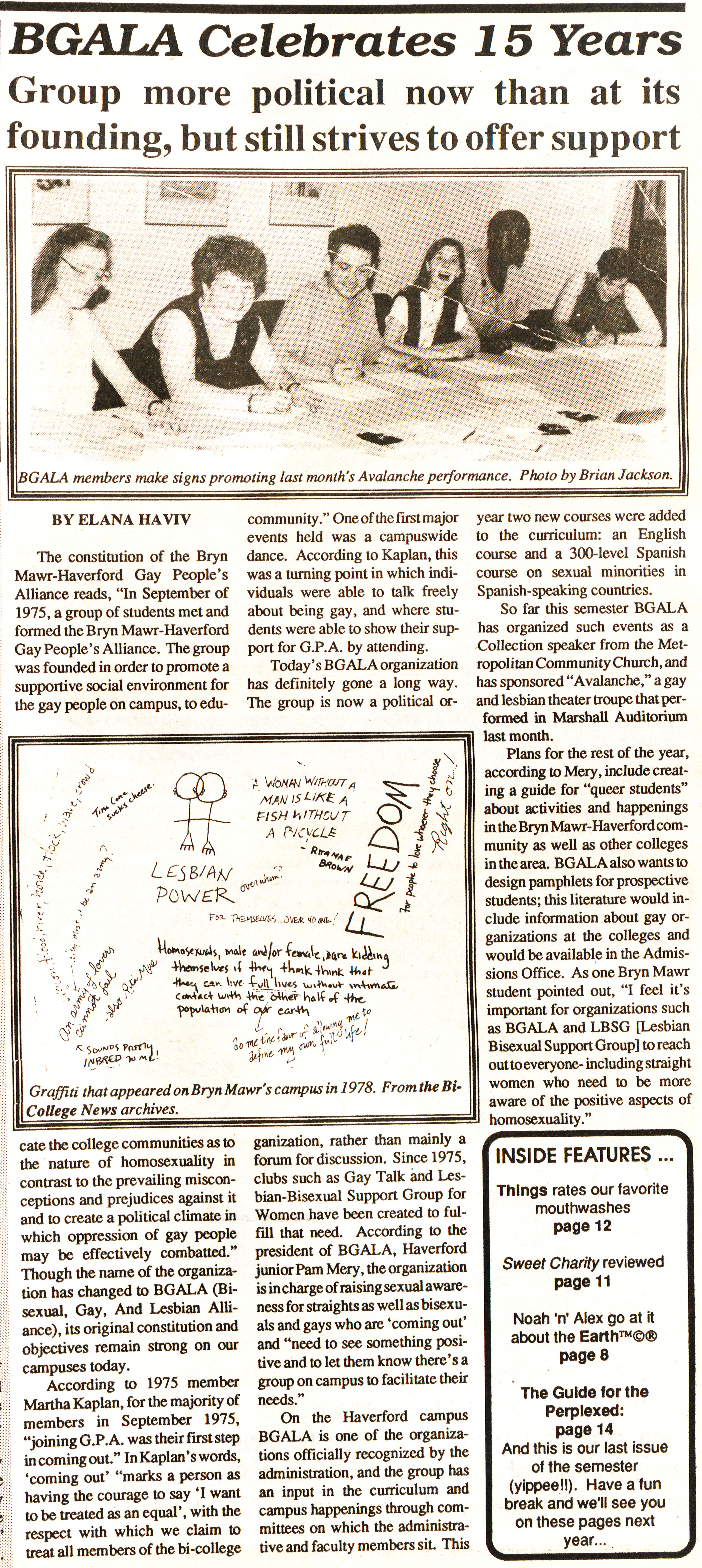
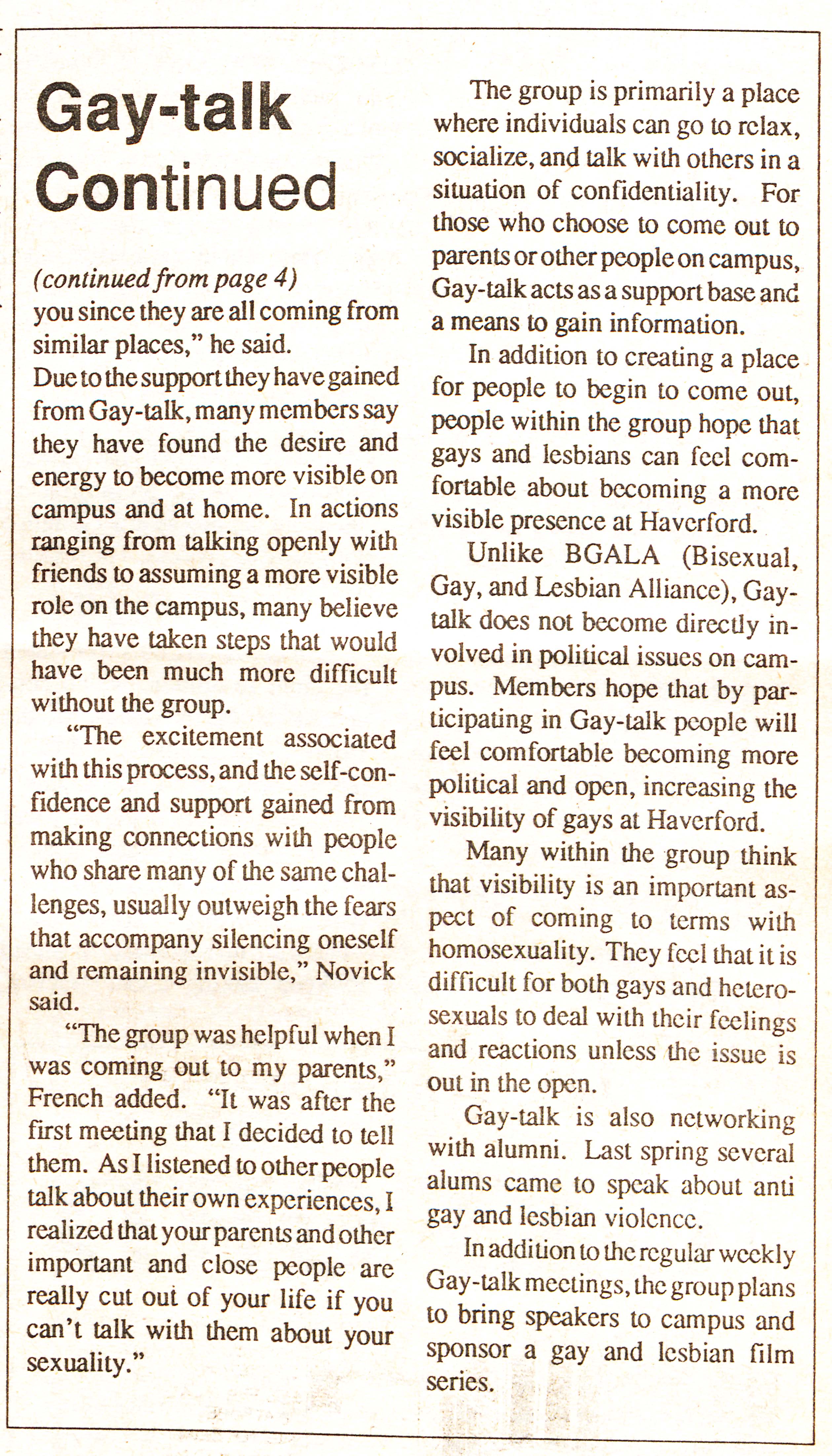
In 1990, BGALA celebrated its 15 year annieversary, counting the GPA as its predecesor organization. In an article in the BiCollege News, this milestone was celebrated. Additionally, this article describes the group's shift towards a more political organization. As a result of this, different auxillary groups were formed to provide more of a social support network.